






 Comment
 Print
Print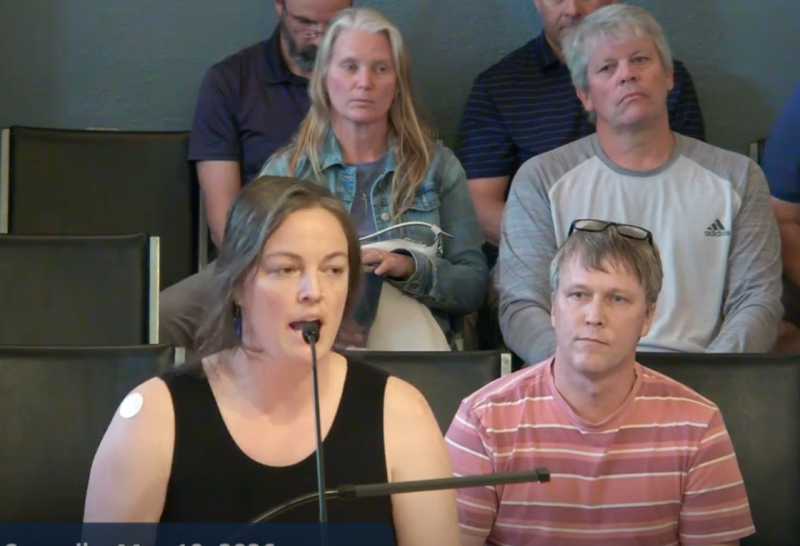
ROCHESER - The Rochester City Council got some hard pushback on Tuesday to a proposed change in a Syringe Service Program that would reduce the needle exchange formula to a one to one basis.
Members of the New Hampshire Harm Reduction Coalition including former Rochester city councilor Ashleigh Desrocher spoke passionately about the life and death dangers of only a 1-1 needle exchange rate.
"If we do this people will die," she said during a public hearing on the proposed ordinance change.
Desrocher pointedly asked Rochester Mayor Chuck Grassie if the City Council had conferred with any public health professionals regarding the consequences of such a change.
"That has not happened at this time," replied Grassie, adding that the city currently has no Board of Health while City Manager Katie Ambrose continues to seek a doctor to head up the board after the former one left town.
Grassie added that he hoped the council would delay a vote until the new Board of Health was up and running and could give them some guidance.
Other advocates for voting down the new ordinance pointed out that it wrongly bans churches from working with harm reduction, safe and supervised injection sites and visible disposal sites.
"How can you have public needle disposal sites that aren't visible," said a man who identified himself only as Zeb."
Last year the Rochester nonprofit that ran the city's Syringe Service Program revealed in a quarterly report that while some 98,000 clean syringes were given out, only about 78,000 were returned, according to SOS Recovery figures.
That factor may have figured into a decision by the city's codes and ordinances committee to recently change the previous practice of up to a 1-10 syringe exchange to a 1-1 exchange basis and move it on for a City Council vote.
City Councilor Les Horne, who serves on the codes panel, said he'd spoken to some who use the exchange program who said they often take multiple clean syringes they get for free and go down to Dover to sell them. The most recent data of drug overdoses in Rochester comes from 2023 when the city saw 209.




 All material on this site is copyright protected under penalty of federal law